


Business travel expense management system. How to choose a solution for your company?
In this guide, you will read about:
- What Is a Travel Expense Management System?
- When Does a Company Need a Travel Expense System?
- What Features Should a Good Travel Expense System Have?
- Travel Requests and Trip Approvals
- Handling Per Diems, Mileage, and Additional Expenses
- Documents Assigned to a Specific Trip
- Cashless Payments and Invoicing Options
- Reports and Budget Control
- Travel Expense Software or a Comprehensive Platform – Which to Choose?
- What to Consider When Choosing a System?
- How worktrips.com Supports Travel Expense Settlements
- From Request to Settlement on One Platform
- Less Fragmented Data, Easier Cost Control
- Cashless Payments and Invoicing
- Rules Tailored to Your Organization
- Frequently Asked Questions About Travel Expense Systems
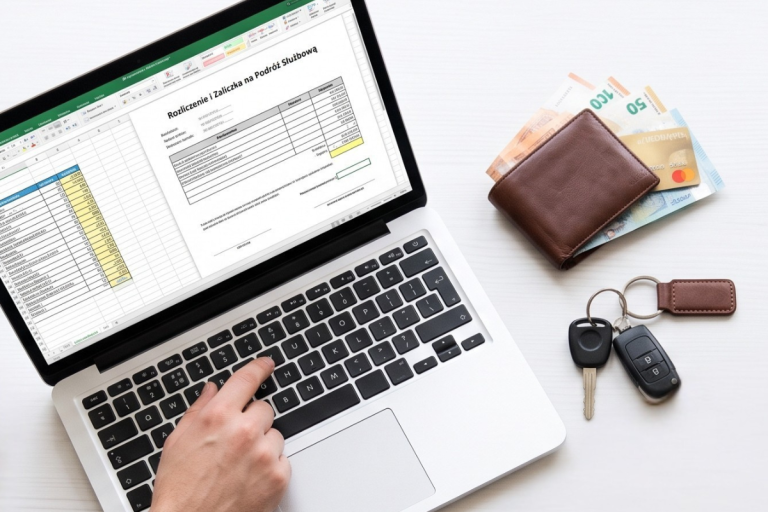
To be completely honest, when dealing with just a few business trips a month, expense settlements can still be managed in a spreadsheet and through forms sent via email. Major difficulties begin when dozens of employees travel, trips take place in different countries, and the finance department needs to continuously monitor expenses, documents, and advances. A travel expense management system organizes information on business trips, costs, and documents, and in a more comprehensive version, connects expense settlements with the earlier stages of trip organization. Thanks to this, a company can reduce manual data entry, streamline document workflows, and gain significantly better insight into spending. However, not every solution on the market offers the same scope of features. How do they differ from one another? Which features are truly useful in daily work? And what should you look for if your goal is more efficient business travel management? Today, we will search for answers to these questions.
What Is a Travel Expense Management System?
It is software that helps a company record and settle business travel costs. Depending on its functional scope, it can serve to calculate employee allowances, collect documents, approve expenses, and analyze organizational spending. It facilitates both individual travel claims and the handling of multiple trips running in parallel. It is worth distinguishing between solutions that are often referred to by similar names:
The difference is truly significant. If a company only wants to calculate per diems quickly, it does not need an extensive platform. However, if it handles many trips, and data regarding bookings, payments, and costs are scattered across several departments, a broader solution can bring far greater benefits. That is why the topic of travel expense settlement should be viewed beyond merely calculating per diems. The entire process matters: from travel requests and organization to verifying documents and transferring data to accounting.
When Does a Company Need a Travel Expense System?
There is no single threshold for the number of trips beyond which implementing software becomes profitable. What matters most is the work organization and the number of tasks performed for each trip. Imagine a company whose employees regularly travel for client meetings, trade fairs, and training sessions. Each trip involves several separate tasks: approving dates, buying tickets, booking accommodation, settling advances, gathering invoices, and verifying additional expenses. This is what routine business trips look like in many organizations.
If information about these tasks ends up with different people and tools, it is easy to lose control over the big picture. Employees do not know if their request has been approved, managers lack full visibility into planned costs, and accounting waits for missing documents. Settling travel expenses then takes more time than the actual verification of amounts owed. Software is especially worth considering when:
- employees frequently travel on domestic and international business trips;
- expense claims are prepared manually in spreadsheets;
- invoices, receipts, and booking confirmations reach the company through various channels;
- employees regularly pay for business expenses out of their own pockets;
- trip approvals require the involvement of multiple people;
- it is difficult to determine the actual cost of travel for a specific department or project;
- the company wants to compare expenses and better plan budgets for upcoming months.
It is worth calculating not only the time spent on the settlement itself, but also on fixing errors, sending document reminders, and resolving discrepancies. These extra tasks are often what make a manual process inefficient.
What Features Should a Good Travel Expense System Have?
The list of features on a provider's website should not be the sole criteria for selection. What matters more is whether specific capabilities solve actual problems occurring in your company. A good system should support both expense settlement and cost control at every stage of the trip.
Travel Requests and Trip Approvals
A good expense workflow starts before the journey begins. An employee should be able to submit a trip request, state its purpose, dates, location, and estimated costs. A travel request can also include the business trip title, advance requirements, and necessary details for the approver. Next, the document goes to the person responsible for business trip approval. It is worth checking whether the software allows customizing approval paths according to your company structure. Employees, team managers, and travel administrators may have different permission levels. Features such as setting up substitutes, viewing request status, and clear tracking of decision histories are very useful. Thus, the workflow system goes beyond storing forms to supporting actual work organization.
Handling Per Diems, Mileage, and Additional Expenses
Travel expense settlements include more than just the sum of hotel and transport invoices. Employee entitlements and expenses incurred during the trip must also be factored in. Depending on company needs, the system should support settlements for:
- domestic and foreign per diems;
- travel expenses;
- mileage allowance if the employee uses a personal vehicle;
- additional out-of-pocket expenses related to the trip;
- travel advances and amounts requiring refund or extra payout.
For international trips, multi-currency support is essential. Before choosing a program, make sure how amounts are converted and whether internal company rules can be applied. However, software alone does not relieve a company from ensuring correct settlement rules. Allowance amounts and calculation methods must comply with relevant regulations and internal company policies.
Documents Assigned to a Specific Trip
A hotel invoice, train ticket, booking confirmation, parking receipt, or transit document – all this information should be easy to locate. In practice, solutions where documents are linked to a specific business trip and cost category work best. The finance department does not have to deduce which trip a bill belongs to based on file names or email threads. When selecting software, look for digital document upload, verification, and data export capabilities for further financial processing.
Cashless Payments and Invoicing Options
Another crucial area is travel funding. If an employee pays for most services out of pocket, the company must reimburse those expenses after they return. With a higher volume of trips, this generates additional work. Therefore, it is worth checking if the provider offers cashless payments, flexible invoicing terms, and consolidated invoicing.
Reports and Budget Control
Data from settled business trips can be useful long after a trip has ended. Business travel reporting allows companies to evaluate where funds are going and identify major corporate travel costs. It is beneficial if the system allows creating summaries by:
For example, a summary of hotel costs in specific cities can help evaluate whether frequent visits to a particular location warrant negotiating rates with select hotels. Likewise, analyzing transport expenses can facilitate comparing different travel options.
Travel Expense Software or a Comprehensive Platform – Which to Choose?
The choice depends on the scale of travel and which stages present the greatest difficulties for your business. Not every organization needs an extensive tool right away, but it is worth knowing what to expect from different solutions.
| Area | Expense Settlement Software | Comprehensive Travel Platform |
| Calculating Entitlements | Depending on features | Can be part of the process |
| Travel Request | Depending on software | Yes, if the module includes this stage |
| Trip Approval | Depending on software | Can be integrated into the workflow |
| Documents and Receipts | Yes | Linked directly to the trip |
| Transport and Hotel Booking | Usually no | Can be available within the same platform |
| Cost Reporting | Depending on software | Usually broader scope of analytics |
This comparison shows typical differences between tool categories. The actual scope of features should always be verified in the documentation of a specific solution.
What to Consider When Choosing a System?
Before deciding on a system, it is worth checking how the tool handles a real scenario from your company.
Prepare an example of a typical business trip and go through all stages:
- Trip Submission – can the employee quickly complete the request and provide key information?
- Approval – does the request reach the right person, and is its status visible to stakeholders?
- Travel Organization – can bookings be linked to an approved travel request?
- Documentation – are invoices, receipts, and confirmations assigned to a specific trip?
- Expense Claim – can per diems, mileage, and additional expenses be added smoothly?
- Further Processing – can data be transferred to accounting or used in a financial system?
- Reporting – will the company receive a summary that allows evaluating travel costs?
How worktrips.com Supports Travel Expense Settlements
The worktrips.com tool combines business travel administrative management with trip organization. On the platform, employees can go through all stages of a trip: from submitting a request and obtaining approval to booking services and settling expenses. In practice, this means that information regarding a single journey does not need to be repeatedly passed between independent forms, messages, and files.
From Request to Settlement on One Platform
The process starts with a travel request where an employee specifies the trip's purpose, location, and dates. They can also request an advance. Next, the document goes to the person responsible for approval according to company rules. Once approved, the employee can proceed to book travel on worktrips.com. Available options include flights, hotels, train tickets, and car rentals. After returning, the traveler fills in the details needed for the expense claim: per diems, mileage, extra costs, and supporting receipts. Services booked beforehand on the platform do not require manual re-keying into the settlement. You can find more details about each stage on the worktrips.com travel module page.
Less Fragmented Data, Easier Cost Control
For finance departments, it is not just about closing a settlement, but also having access to actionable data for further work. The worktrips.com platform provides reports based on travel and expense data. These support cost analysis, budget control, and data preparation for further financial and accounting processing, including ERP system integration.
Cashless Payments and Invoicing
The platform also supports cashless payments and invoicing solutions, including consolidated invoices and flexible settlement models. For companies managing multiple trips, this means fewer scattered documents and simpler expense organization. Read more about the importance of consolidated invoices in business travel in our article KSeF and corporate business travel – how it works in practice.
Rules Tailored to Your Organization
Every company has its own travel approval processes, spending limits, and booking policies. Therefore, it is essential that a tool does not force a single template onto all employees. The workflow on worktrips.com can reflect your organization's travel policy, financial rules, and approval chains. Well-defined rules also help organize travel advances, limits, and expense categories. If you are currently setting up these rules, our guide will be helpful: Corporate travel policy guide – template and rules.
Frequently Asked Questions About Travel Expense Systems
Does travel expense software support international trips?
Many solutions support both domestic and international trips. Before choosing, check whether the program supports multi-currency options, per diem rates, accommodation rules, and expenses incurred outside the country. An example of a tool with all these features is the worktrips.com platform.
How much time does an employee have to settle a business trip?
According to general regulations, an employee should settle travel expenses no later than 14 days after the trip ends. Specific rules should be verified in relevant laws and internal company policies.
Does paying with a corporate card replace expense claims?
No. Cashless payments facilitate funding expenses, but do not replace document submission or calculating employee entitlements. Costs still need to be properly assigned to specific trips.
Can travel advances be settled in the system?
Depending on software features, advances paid prior to departure can be included and reconciled against expenses incurred by the employee. This makes it easy to determine if unused funds should be returned or if additional payouts are due to the employee.